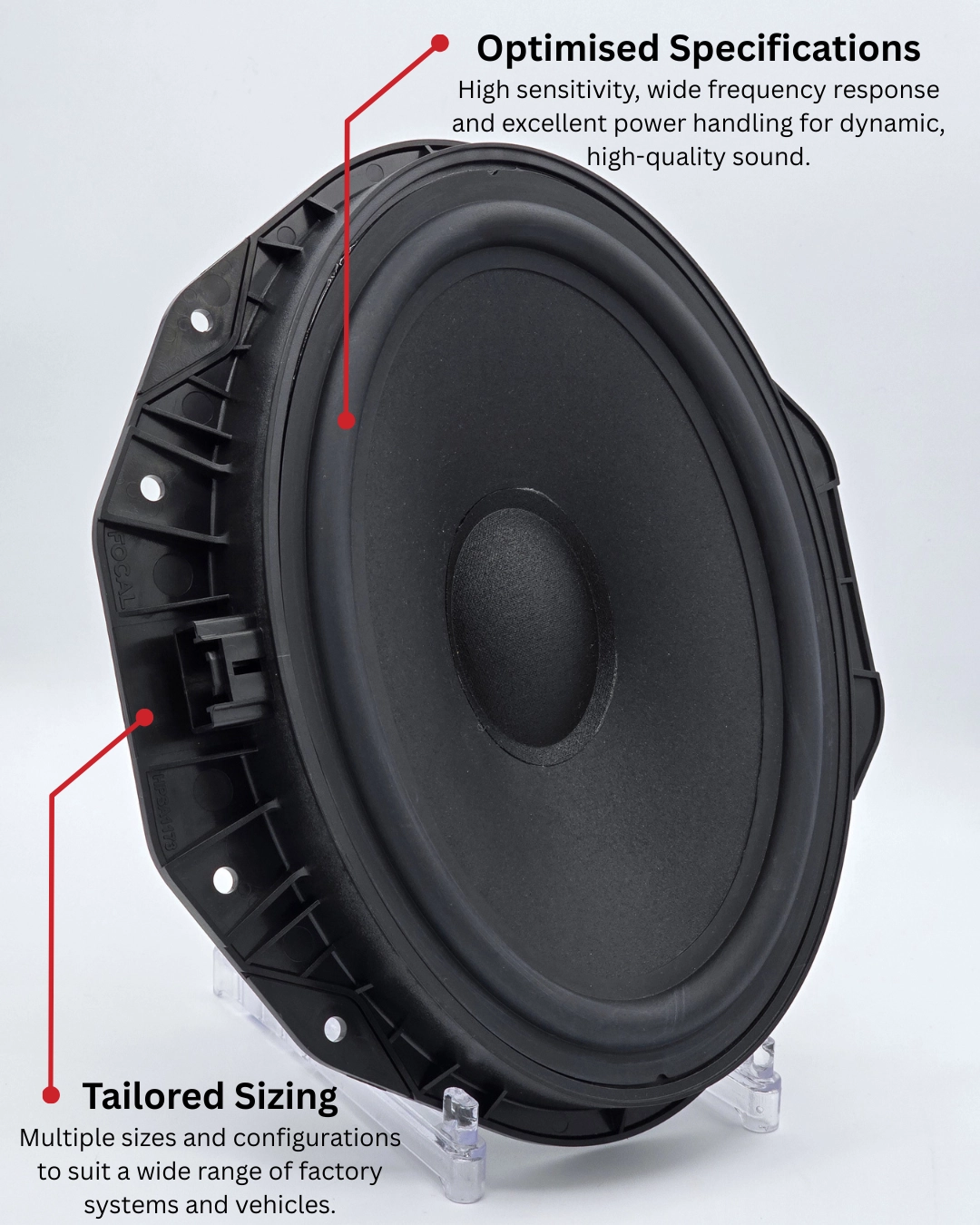
Vehicle-optimised speaker sizing matters because a successful factory car audio upgrade is about much more than choosing a speaker with the same diameter as the original speaker. While speaker size is important, it is only one part of the fitment and performance equation.
Many people assume that if a vehicle has a 6.5-inch speaker, any 6.5-inch aftermarket speaker should fit and work properly. In reality, two speakers with the same nominal diameter can have very different mounting depths, basket shapes, screw locations, magnet sizes, connector types, impedance ratings, sensitivity levels and power requirements. These details can determine whether the speaker fits correctly, performs properly and integrates safely with the factory audio system.
Mounting depth is one of the most important considerations. A speaker may appear to be the correct size from the front, but the magnet or basket may be too deep for the factory door cavity. If the speaker sits too far back, it may interfere with the window mechanism, inner door structure or factory trim. If it sits too far forward, the door trim or factory grille may not refit correctly.
Basket shape also matters. Factory speakers are often shaped specifically to suit the door or dashboard opening. A universal speaker may require spacers, adaptors or custom fabrication to sit securely. If the speaker is not mounted flat and sealed properly, bass response can suffer and unwanted vibration may occur.
Connector design is another key detail. In many modern vehicles, the original speaker wiring uses factory-style plugs rather than bare speaker wire. Focal Inside plug and play kits are designed to work with compatible factory wiring arrangements, reducing the need to cut, splice or permanently modify the vehicle’s original wiring. This can make installation cleaner, more efficient and more reversible.
Impedance must also be considered. Some factory audio systems use speakers with specific impedance ratings, especially vehicles with factory amplifiers or premium sound systems. Replacing a factory speaker with a speaker that has the wrong impedance can affect volume, amplifier behaviour, system balance or reliability. In some cases, it may even cause the factory amplifier to operate outside its intended range.
Sensitivity is equally important, particularly when retaining the original head unit or factory amplifier. Speaker sensitivity indicates how efficiently a speaker converts power into sound. A well-matched, efficient speaker can often produce clearer and more dynamic sound from the limited power available in many factory systems. A speaker that requires more power than the factory system can provide may not perform to its full potential without an amplifier.
Power handling is often misunderstood. A speaker with a very high RMS power rating is not automatically better for a factory system. If the speaker needs more amplifier power to perform properly, it may sound restrained or less lively when connected to a low-powered factory head unit. The best speaker is the one that matches the available power, vehicle design and intended upgrade path.
Focal Inside removes much of this guesswork by offering configurations developed around compatible vehicle applications. Different Focal Inside speakers use different dimensions, specifications and fitment approaches depending on the system they are designed to replace. This helps create a more suitable upgrade than simply choosing a generic speaker based on diameter alone.
This is especially important when the goal is to retain the factory head unit. Many drivers want better sound without replacing the original stereo, changing the dashboard or losing features such as steering wheel controls, Bluetooth, navigation, reverse cameras, parking sensors or vehicle settings. A vehicle-optimised speaker upgrade can improve sound quality while maintaining the way the car operates.
Focal Inside systems are also designed to remain compatible with the vehicle’s original car radio in supported applications. This allows owners to improve their audio system without necessarily replacing the source unit. For many vehicles, that makes the upgrade simpler, neater and more practical.
A vehicle-optimised speaker can help extract more performance from the existing system. Better cone materials, improved motor structures, appropriate sensitivity and correct fitment can improve clarity, detail, midbass and overall balance. The result is not only a speaker that fits, but a speaker that is better suited to the vehicle and the audio system around it.
If greater performance is wanted later, the system can often be built upon with additional amplification, DSP tuning, sound deadening or a subwoofer. This staged approach allows the first speaker upgrade to become the foundation for future improvements rather than something that needs to be replaced again.
Compatibility should still be confirmed before purchasing. Vehicle model year, trim level, factory amplifier option, premium audio package, body style and regional specification can all affect the correct recommendation. A speaker listed for one version of a vehicle may not suit another version with a different factory audio system.
Professional installation is also important. Even a correctly sized speaker can underperform if it is poorly mounted, wired incorrectly or not sealed properly to the door. Secure mounting, correct polarity, proper sealing and careful integration help the speaker deliver the clarity and performance it was designed to provide.
For the best result, speak with an Authorised Focal Australia Dealer. They can confirm the correct Focal Inside speaker solution for your vehicle, check factory compatibility and recommend whether your system should remain speaker-only or be expanded later with amplification, DSP tuning or a subwoofer.